

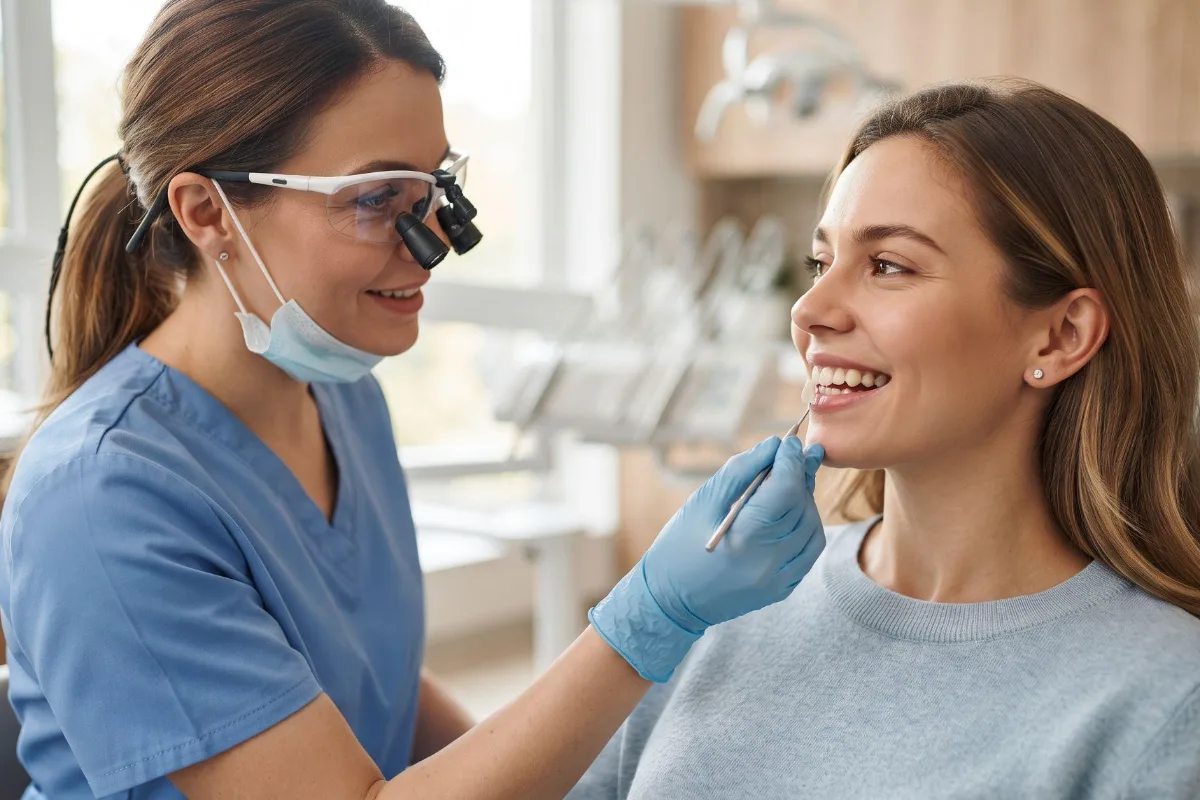
Noticing a different edge when you run your tongue over it, discovering a small fracture, or seeing that a veneer has come loose can cause concern. Besides the change in your smile, an immediate question arises: Can it be repaired or will a new one have to be made?
A A broken or detached veneer does not always require the same treatment.. It may be necessary to polish a small imperfection, repair an area, re-adhere the veneer, or replace it. To decide, we first need to check what has happened and the condition of the tooth.
In Doctor Dent, your dental clinic in Sitges, We value the aesthetics, health, and function of the smile. Solving the problem also requires understanding its cause.
What to do if a veneer breaks or peels off
If the veneer has completely come off, store it in a clean container and take it to your appointment. Even if it appears intact, the dentist should check if it can be reused.
While you wait for the assessment:
- Don't try to stick it on with household adhesives. nor repair products on your own.
- Avoid biting hard foods with the affected tooth.
- Maintain hygiene gently, without manipulating the area.
- Contact the clinic and explain if there is pain, tenderness, or an edge that is hurting you.
You don't have to wait until it hurts to seek medical advice. The appearance of the tooth and the absence of discomfort alone don't tell you what treatment it needs.
A broken veneer and a detached veneer are different situations.
When a veneer comes loose, it may retain its full shape. In that case, it is assessed whether it can be reattached.
If it's fractured, what matters is how much material is missing and where the damage is located. A small chip on an edge doesn't pose the same difficulties as a large break.
The first decision involves identifying what is damaged: The veneer, its bond with the tooth, or even the underlying tooth structure are all examined. Based on this assessment, the alternatives are considered, without assuming that replacement is always necessary.
What does the dentist check before proposing a solution?
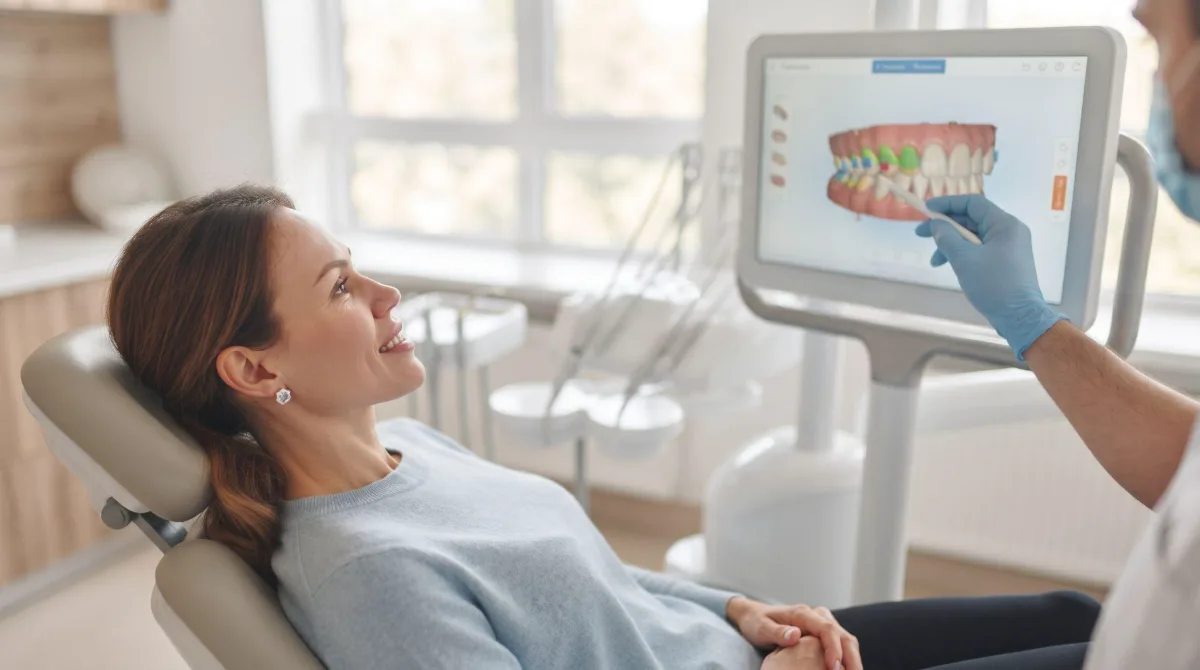
The assessment is not limited to observing the area that has broken. The following are also checked:
- The veneer material: composite or ceramic.
- The extent and location of the defect.
- The condition of the tooth, including the possible presence of cavities.
- The adaptation of the restoration and the conditions for achieving adequate adherence.
- The bite and habits, such as clenching your teeth or biting objects.
It is also helpful to explain when it happened, if there was a blow, and if that same veneer had already caused problems. Identifying the cause helps in choosing a solution with a better prognosis.
When can a veneer be repaired?
Composite veneers are generally easier to repair. In certain localized areas of damage, material can be added to restore the shape, and a finish and polish can be performed.
Ceramic veneers require a different assessment. Some defects may be repairable, but their feasibility depends on the material, the affected area, and the bonding conditions.
Repairing can allow you to preserve a restoration that remains useful, provided the result is clinically acceptable. The decision should also consider durability and aesthetic integration.
For example, repairing a small defect doesn't present the same demands as reconstructing a large portion of a veneer's edge. The dentist should explain what the expected outcome can be and what limitations each option has.
What if it's come completely off?
The fact that the veneer is complete allows us to study the possibility of re-adhering it, but does not guarantee that it can be done.
First, the fit, the integrity of the veneer, and the tooth surface must be checked. If there is an underlying problem or the veneer no longer meets the necessary conditions, another solution may be preferable.
That's why, Keeping the veneer is helpful; trying to reattach it at home is not.. Bringing it in for a consultation allows us to examine it and assess whether it can be used.
When might it be necessary to replace it
Replacement may be considered when the damage is extensive or when a repair does not allow for the recovery of adequate conditions of function, fit and aesthetics.
It may also be necessary to change the approach if the tooth has a lesion that requires prior treatment. The priority is to ensure that the base on which the restoration will be placed is in suitable condition.
If the veneer breaks or peels off repeatedly, it's advisable to re-examine the cause. The bite, the condition of the tooth, and habits are all part of that assessment. The goal is to avoid a series of fixes without understanding what is failing.
Check your veneer at Doctor Dent

At Doctor Dent, we study each case before recommending a treatment. Dental veneers in Sitges. We examine your teeth, gums, and bite to determine a solution tailored to your smile.
If you want to know how to achieve a harmonious result, read our guide on natural dental veneers. And if you're unsure between several options, we'll explain. How to choose between veneers or invisible orthodontics and how the digital smile design It allows you to plan the treatment before starting.
Our team has the Dr. Corina N. Bratu, specialist in aesthetics and comprehensive oral rehabilitation and medical director of the clinic. You can learn more about it in the section on our team.
If a veneer has broken or come loose, you can request an appointment, call us at 938 110 007 or write to us by WhatsApp at 659 428 355.
We are in Carrer de l'Hort Gran, 14, 08870 Sitges, Barcelona.