

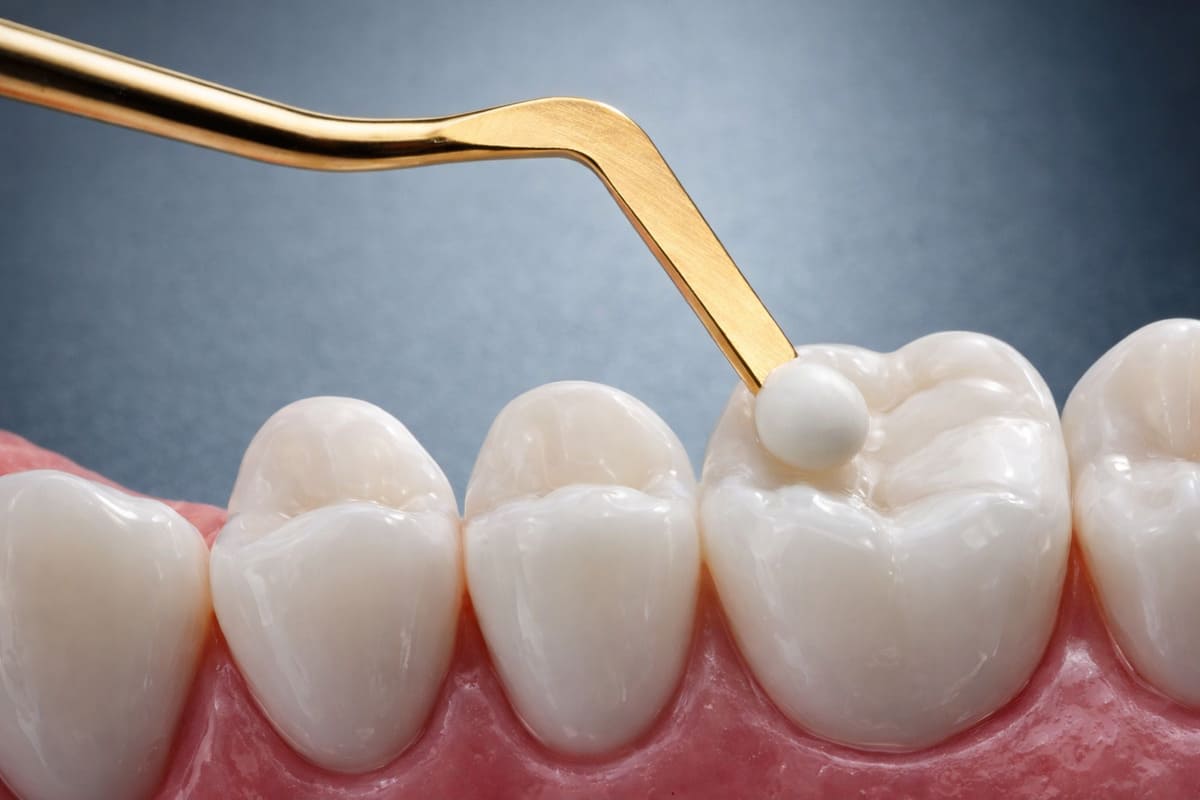
A dental inlay is a usual restorative treatment, It is conservative and highly effective. It is nothing unusual or exceptional. It is used to repair back teeth—molars and premolars—that present moderate cavities, fractures, or significant loss of structure, provided that the damage is not so extensive as to require a full crown.
Inlays are rigid partial restorations that allow the restoration of the function and aesthetics of the tooth while respecting its natural structure as much as possible.
Why are dental inlays used?
When a posterior tooth has suffered a large loss of tooth structure, traditionally the most common treatment was the devitalization of the tooth, followed by a large reconstruction and the placement of a cap or crown so that it could properly withstand the forces of chewing.
Currently, thanks to advances in adhesive techniques and materials, in many cases it is possible to opt for dental inlays, A more conservative alternative that allows for strengthening the tooth without removing unnecessary healthy tissue. This type of treatment falls within the conservative dentistry where the main objective is to preserve the natural tooth whenever possible.
What does inlay treatment involve?
A dental inlay is a minimally invasive treatment.
Tooth preparation is limited solely to the removal of damaged tissue, leaving most of the healthy structure intact.
The inlay is custom-designed and, in most cases, made in the dental laboratory, This allows for a precise fit, high resistance, and a very natural aesthetic result.
When is a dental inlay indicated?
The main indications for performing a dental inlay are:
- Significant loss of tooth structure
- Devitalized teeth that need reinforcement
- Patients who are not good candidates for full crowns
- Cases where high aesthetics and durability are sought
In all cases, it is the dentist who assesses whether the inlay is the most appropriate option according to the clinical situation of the tooth.
Materials used in dental inlays
Dental inlays can be made with different materials, the most common being:
- Composite reinforced with ceramic particles, more resistant than the conventional composite used in clinics
- Ceramics, especially suitable when maximum aesthetics, stability and long-term durability are required
The choice of material depends on factors such as the tooth's location, chewing force, desired aesthetics, and each patient's individual characteristics. In this sense, inlays are also part of the treatments for cosmetic dentistry when a natural and harmonious result is desired.
Types of inlays according to their extent
Dental inlays can vary in size and coverage:
- They can cover a small part of the tooth
- To cover a wide area
- Or even cover the entire occlusal surface (the chewing area) when the tooth is very weakened
The goal is always the same: protect the tooth, strengthen it and prolong its lifespan, avoiding more invasive treatments when they are not necessary.
Professional assessment and personalized treatment
Each case must be studied individually. A proper clinical evaluation determines whether a dental inlay is the best option or if another type of restorative treatment is more suitable.
You'll find us at Doctor Dent Sitges, in it Carrer de l'Hort Gran, 14, 08870 Sitges (Barcelona).
If you need a dental evaluation or want to know if an inlay is the right treatment for you, you can call us at 938 11 00 07 and make an appointment.